Tap to view full screen
The Surprising History of the Munchkin Cat
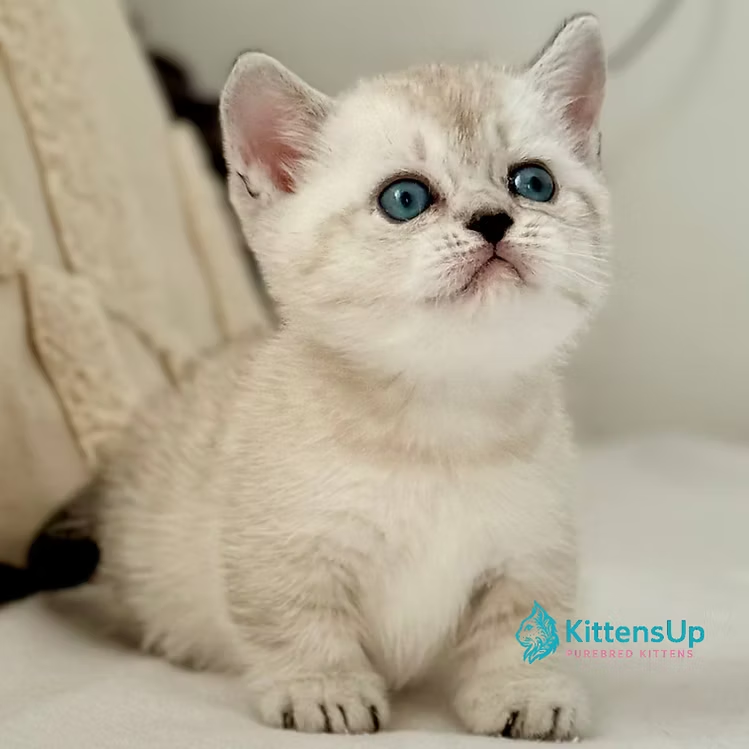
The Munchkin cat, with its distinctive short legs, might seem like a modern, designer breed, but its history is as unique and charming as the cat itself. The breed's foundation is built on a naturally occurring genetic mutation, not human intervention.
Early Sightings
Reports of short-legged cats have appeared throughout history. In the 1940s, a British veterinarian described several generations of short-legged cats, but these lines disappeared during World War II. Similar cats were also noted in Russia in the 1950s.
The Mother of All Munchkins
The modern Munchkin breed can be traced back to a single cat, a stray with short legs found in Louisiana in 1983 by a music teacher named Sandra Hochenedel. She named the cat Blackberry, and when Blackberry had a litter of kittens, half of them shared her short-legged trait.
Hochenedel gave one of Blackberry's male kittens, Toulouse, to a friend. It's from Blackberry and Toulouse that the Munchkin breed as we know it today was established. The breed was first introduced to the public in 1991 and was accepted into The International Cat Association's (TICA) new breed development program in 1994.
A Controversial Beginning
The breed's introduction was met with controversy. Some critics worried that the genetic mutation responsible for the short legs could lead to spinal and mobility issues, similar to those seen in short-legged dog breeds like Dachshunds. However, extensive studies have shown that the Munchkin gene is different and does not cause these problems. Munchkins are surprisingly agile and healthy cats.
Today, the Munchkin is a recognized and beloved breed, cherished for its playful personality and unique appearance. Their history is a testament to the beauty of genetic diversity and the loving homes that have embraced these special cats.